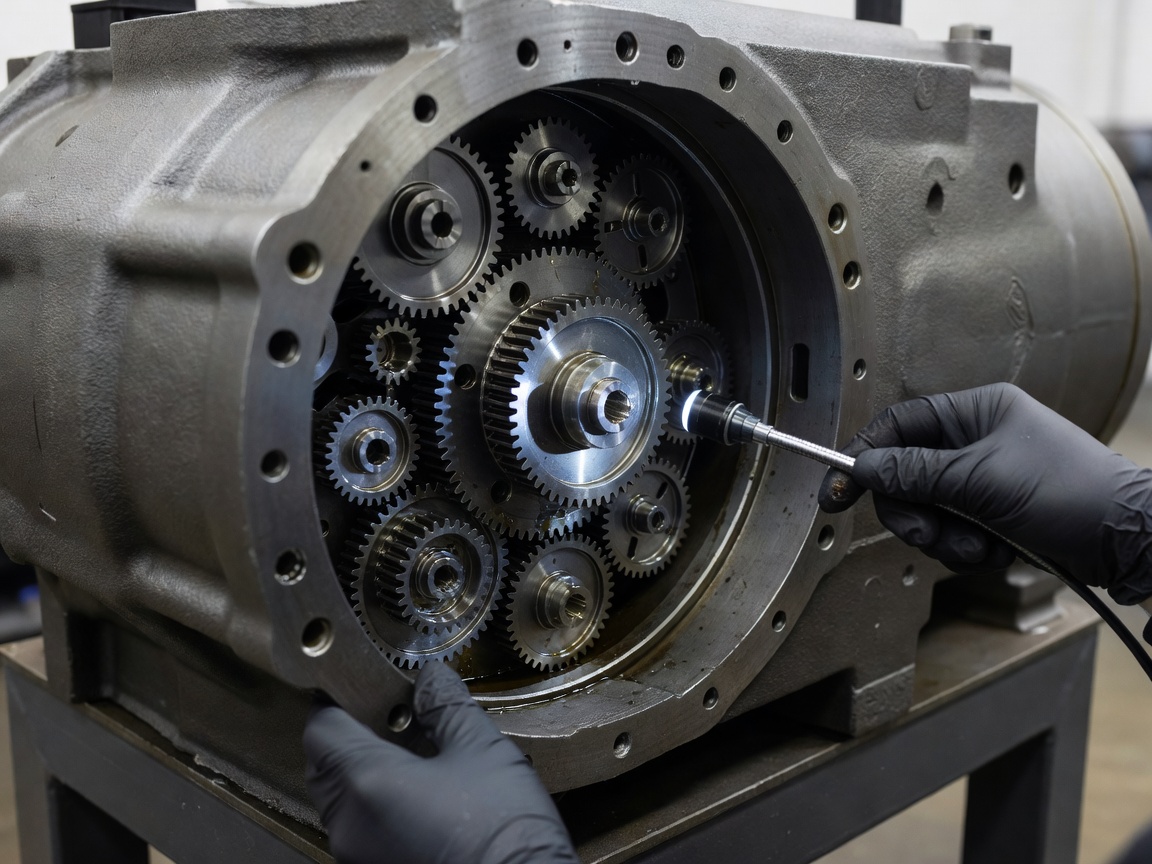
 Figure 3: Video borescope inspection of high-speed intermediate pinion gear teeth, verifying absence of micropitting.
The Tribological Challenge of Geared Wind Drivetrains
We view the wind turbine drivetrain as one of mechanical engineering's most demanding proving grounds. Unlike steady industrial gearboxes running in climate-controlled power stations, a wind turbine gearbox experiences stochastic wind gusts, emergency stops, grid disconnect shock torques, and continuous non-torque bending loads transferred from the rotor hub.
Typical configurations utilize a single planetary low-speed stage coupled with a second planetary stage and a final high-speed helical gear set. Achieving an operational lifespan of 20 to 25 years requires keeping gear tooth contacts separated by a microscopic elastohydrodynamic (EHD) oil film often less than 1.0 micrometer thick. When load spikes break this fluid barrier, metal-to-metal boundary friction induces adhesive wear, scuffing, and white etching cracks (WEC).
Main Shaft Bearings: Spherical Roller vs. Tapered Roller Pairs
The main shaft transmits multi-meganewton thrust loads from the rotor directly into the bedplate. Historically, 3-point suspension systems utilizing a single spherical roller bearing (SRB) experienced premature failures because axial float induced excessive skewing of the unloaded roller row.
Modern designs increasingly favor back-to-back tapered roller bearing (TRB) arrangements or moment bearings. Maintenance of these units demands stringent grease replenishment cycles. We verify automated single-point grease injection pumps, inspect grease collection bottles for metal flecks, and test purged grease for soap degradation and base-oil bleeding ratios.
Gearbox Lubricant Conditioning Architecture
Gear oil is not merely a lubricant—it is a critical cooling medium and diagnostic carrier. Standard utility installations circulate 400 to 1,200 liters of synthetic polyalphaolefin (PAO) or ester-based ISO VG 320 oil. Filtration systems incorporate two-stage depth filter elements (10 μm down to 3 μm) paired with high-gradient magnetic plugs to capture ferrous wear particles before they enter bearing raceways.
Pitch and Yaw Drives: Slewing Rings and Drive Pinions
While the main drivetrain converts rotational power, the yaw and pitch subsystems govern aerodynamic trim and safety feathering:
- Blade Pitch Systems: Modern turbines utilize independent electro-mechanical or electro-hydraulic pitch drives for each blade. Hydraulic systems rely on proportional servo-valves, piston accumulators, and rotary unions. We inspect for hydraulic seal micro-leakage and verify nitrogen pre-charge pressure in emergency feather accumulators.
- Yaw Drive Geared Rings: Multiple electric motor-gearbox units mesh with an external or internal bull gear on the tower top flange. We assess tooth backlash, check yaw brake friction puck thickness, and verify that disc surfaces remain free of oil mist contamination.
Slip Rings, Generator Bearings, and Shaft Current Mitigation
Double-fed induction generators (DFIG) and permanent magnet synchronous generators (PMSG) operate at high rotational velocities. Fast-switching pulse-width modulation (PWM) frequency converters induce high-frequency common-mode voltages across the rotor shaft. If not effectively grounded, these voltages discharge through generator bearings, creating electrical discharge machining (EDM) fluting—wash-board grooves across bearing raceways.
Maintenance protocols mandate monthly inspection of grounding carbon brushes, checking brush spring pressure and replacing worn carbon blocks before stray currents track through insulated bearing ceramic coatings.
| Mechanical Subsystem | Lubricant / Medium | Inspection Cadence | Critical Failure Mode |
|---|---|---|---|
| Main Rotor Bearing | Synthetic lithium/calcium grease | Monthly purge check, semi-annual audit | Roller skewing, raceway spalling |
| Main Gearbox Stages | PAO Synthetic Oil (ISO VG 320) | Continuous online particle count + quarterly lab | White etching cracks (WEC), micropitting |
| Yaw & Pitch Bearings | EP synthetic grease | Semi-annual clearance audit | False brinelling, tooth root crack |
| Hydraulic Pitch System | ISO VG 32 / 46 hydraulic fluid | Quarterly fluid check, annual valve test | Seal extrusion, nitrogen accumulator loss |
Up-Tower Component Overhauls vs. Complete Nacelle Drops
When a high-speed pinion bearing or intermediate shaft fails, mobilizing an 800-tonne mobile crane or offshore jack-up vessel costs hundreds of thousands of Euros. Asset managers prioritize up-tower repair methodologies.
Using specialized internal nacelle gantries, hydraulic induction bearing heaters, and modular puller tools, trained technical teams can replace high-speed shaft stages and mechanical brake calipers entirely inside the nacelle shroud, avoiding the crippling cost of lowering the complete 70-tonne gearbox to ground level.